What Happens When You Call for Emergency Sanitation?
You tell the dispatcher headcount, address and how long you expect to need service, and West Albany Porta Pros builds the order around that instead of a standard delivery slot. A displaced household might need one standard portable toilet and a hand sanitizer station for a week. A shelter running out of a school gym in West Albany might need a bank of units sized to the headcount, plus a handwashing station that meets 29 CFR 1910.141(d)(2), which requires soap and towels or a hand drying device, not sanitizer alone. If the water table is up and septic systems are backing up across a block, the answer might be a holding tank rental instead of a fix on the existing tank. We ask about vehicle access too, because a roll-off dumpster delivery needs about 60 feet of straight clearance behind the truck, and storm debris rarely leaves a driveway that clean. When the emergency involves downed power, we can pair units with a light tower rental or a temporary power pole so the site is workable after dark. Everything gets billed against the emergency porta potty rental rate structure, not a standard weekly contract, because disaster work does not run on a normal schedule.
How Many Units Does a Disaster Site Actually Need?
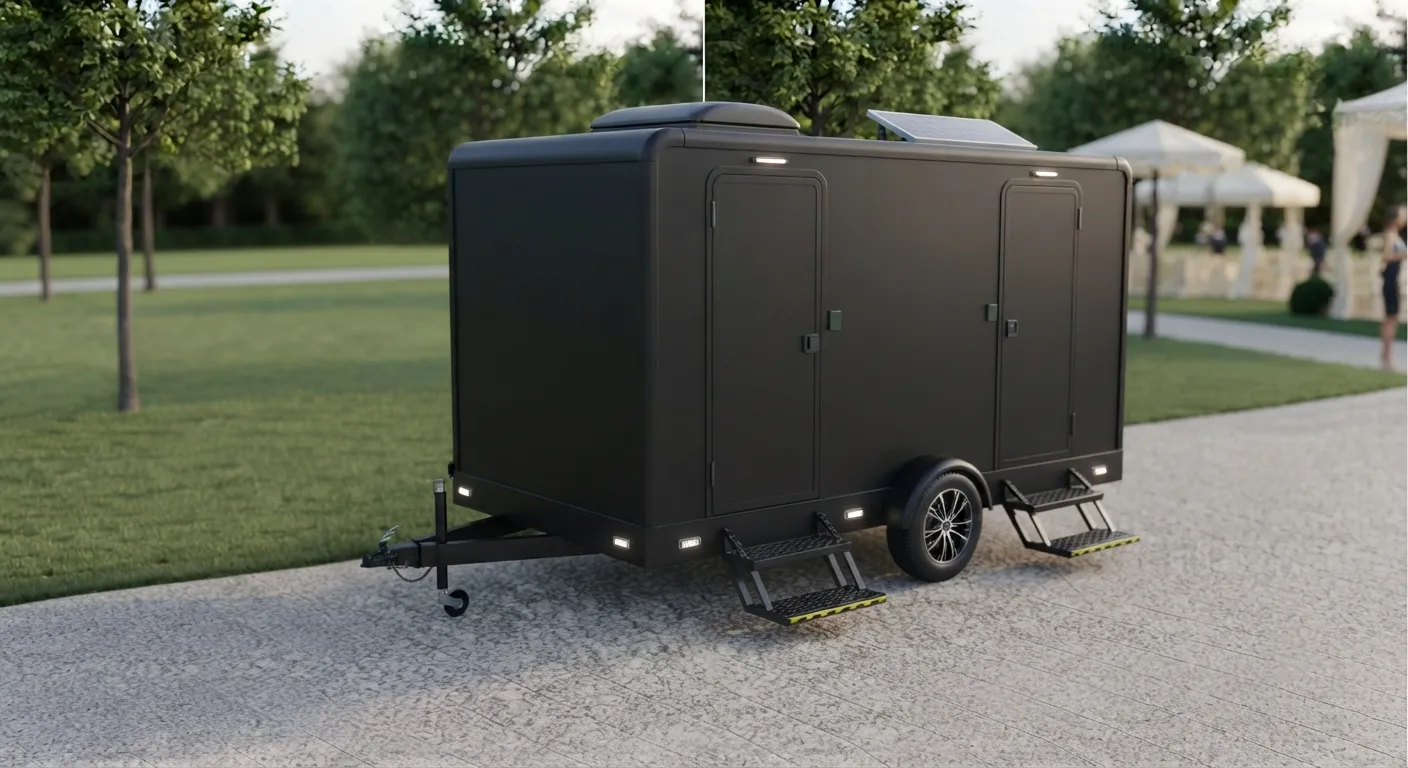
For a work crew or shelter population, the baseline is OSHA 1926.51(c), which sets 1 toilet for 20 workers or fewer, then 1 toilet seat and 1 urinal per 40 workers as headcount rises past that, and 1 seat and 1 urinal per 50 workers once you hit 200 or more. That ratio was written for construction sites, but it is the number most emergency managers reach for anyway because it is the one that is actually published, and West Albany Porta Pros uses it as a floor for shelter and staging-area counts too. Add in ADA Standards section 213.2: where portable units are clustered, at least 5 percent, and never fewer than one, has to be an accessible unit, with a 60 inch turning circle inside per section 304.3.1 and a 32 inch clear door opening per section 404.2.3. A displaced elderly resident or someone using a mobility device does not stop needing that access because the event is an emergency. Our guide on how many porta potties you need walks through the math for shelters, staging yards and multi-day cleanup crews, and the OSHA portable toilet requirements page breaks down the ratio table in full.
What Does Emergency Sanitation Cost During a Disaster?
| service | duration | typical range |
|---|---|---|
| standard unit | day | $100 to $350 |
| standard unit | week | $130 to $500 |
| delivery fee | day | $100 to $500 |
| septic pumping | day | $150 to $300 |
| dumpster | week | $426 to $778 |
These are the same bands used for planned work, because emergency jobs still price out by unit and duration, just compressed into a faster timeline; see the full breakdown on porta potty rental cost and dumpster rental cost. A weekend disaster callout for a restroom trailer runs higher than a weekday order, since crews are pulled off other routes to cover it. If the disaster involves a failed septic system rather than a lost building, septic pumping service and emergency septic service get dispatched separately from the toilet order, and a household on a 1,000 to 1,500 gallon tank that floods out early may need a pump-out well ahead of its normal 3 to 5 year cycle. Storm cleanup debris that does not fit a dumpster's allowed load, like flooded drywall soaked with contaminants, should be checked against what cannot go in a dumpster before it gets loaded, and dumpster weight limits matter more than usual when debris is waterlogged.
Bethlehem sits 8.3 miles south of West Albany and Guilderland 9.7 miles west, both close enough that West Albany Porta Pros can shuttle spare units between yards if one town's disaster draws down local stock faster than the other's. Troy, 11.5 miles northeast, and Clifton Park, 19.0 miles north, fall inside the same response network for county-wide events like a multi-town ice storm. Placement in the public right of way during a disaster still needs confirming with the City of West Albany, since blocked sidewalks and staged equipment can trigger the same review a routine job would face; check the porta potty permit requirements page before units go curbside. For general placement logic once the emergency phase eases, the porta potty placement guide covers ground stability and clearance.
Frequently asked questions
How fast can you deliver during a declared emergency?
Same-day for standard units is typical when roads are passable; trailers and multi-unit shelter orders can take up to 48 hours. Call volume during regional storms slows things down, so the sooner West Albany Porta Pros gets the address and headcount, the sooner a truck gets routed.
Do you work directly with shelters and emergency management?
Yes. We coordinate headcount-based orders for shelters, staging yards and county deployments, sizing unit counts against OSHA 1926.51(c) ratios and ADA Standards section 213.2 for accessible unit percentages, same as any large event order.
Can you supply a holding tank instead of pumping a damaged septic system?
Often, yes. If a septic system is flooded or structurally compromised, a holding tank rental can serve a household or building until the system is inspected and repaired, avoiding a repeat emergency pump-out.
What if debris removal is part of the disaster response?
Roll-off dumpsters handle storm debris, but weight and contamination limits still apply. Check dumpster weight limits and what cannot go in a dumpster first, especially for waterlogged material.
Does emergency service cost more than a standard rental?
Weekend and rush emergency callouts run higher than a scheduled weekday delivery, reflecting rerouted crews and after-hours labor. Standard per-day and per-week unit pricing still applies once service is running on a normal rotation.
Next step
Get a delivery date
Tell us the address, the dates and the headcount. We size the order and confirm the route.